Posted By
Naipnews.members
On
In
专家观点,产业,学者观点,工业设计 |
No Comments
圖片來源 : shutterstock、達志影像
最早对无实体或「虚拟」设计接受法律保护的呼声,可以追溯到20世纪的70和80年代,Apple、Sun Microsystems和Microsoft等以开发软件生成的图像和图形用户接口(Graphical User Interface,GUI)作为营利用途的公司。本篇将介绍美国的对无实体设计法保护的政策趋势。
美国专利及商标局(United States Patent and Trademark Office,USPTO)一直在探索有关数字设计保护的现行实务。世界知识产权组织(WIPO)在2016年开始努力了解世界各地数字设计的保护情况。当时美国和日本主导了一项有关该主题的研究,并由美国继续透过其产权组织与许多其他国际合作伙伴共同推动这一主题。
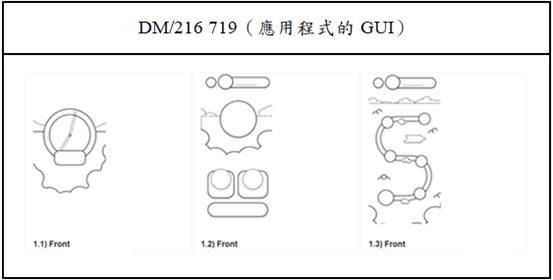
USPTO在2022年2月11日的DM/216 719海牙国际工业设计申请案(如图18所示)的核驳理由书中说明:「依据计算机生成图像的设计专利申请审查指南,计算机生成图像设计必须实施于计算机屏幕、终端机、其他显示面板或其他部分,才能符合美国专利法第171条之规定[1]」。因此,本申请案之目标不符合上述规定,故图示中未能以实线或虚线揭露计算机屏幕、终端机、其他显示面板或其他部分,且未指明为专利法第171条规定之制品。尤其是因为计算机图像不是实体或物理实体,不是适当的制品,计算机图像本身是不可授予专利的,因为在图示中未能描绘出它所实施的特定制品。「应用程序图像」并不是个适当的设计名称,计算机图像必须实施于计算机屏幕、终端机、其他显示面板或其部分者,建议修正设计名称为「带有图像部分之显示面板」(display screen of portion thereof with icon)、同时修正设计说明及权利主张。
美国联邦巡回区上诉法院(United States Court of Appeals for the Federal Circuit, C. A. F. C.)应对制造品要求采取广泛的观点,对第171条的文本分析支持对制造品要件的广义解释。该法规目前要求设计仅适用于「制品」[8]。这种广泛性的语言显示了该法规的全面范围。此外,法定语言的一贯简化反映了美国国会对包容性专利主题政策的偏好[9]。在In re Hruby案中 [10],CCPA以物理学家和哲学家的观点,认为「固体」的概念本身就是一种幻觉,物体大多是真空的,「物质」由原子核和绕其运行的电子组成。然而,通俗地说,我们在这里所看到的是喷泉,不是在太空中移动的水滴,就像我们在固体物体中看到的原子核、电子、原子或分子一样。它强调,虽然固体物体看起来是一个单一的物体,但它实际上是数百万个小颗粒,很像由移动的水滴组成的喷泉,看起来是连续的、单一的水流。 [11]其次,法院又声明,尺寸和固定性不会产生不可专利的主题。最后,法院驳回了水喷雾不构成制品的论点,因为它们不能「自行存在(exist of themselves)」。具体而言,CCPA 认为「设计的存在对其自身外部事物的依赖,并不是认定该设计不是『用于制品』的设计的理由。」 法院强调许多设计的外观取决于外部因素。因此,CCPA 认为,根据字典的要点,制品是指「由人的双手」用原材料制成的任何东西,无论是字面上的手工、机械还是艺术。又根据设计专利法,「制品」可能是无形的并且依赖另一个物体(an 「article of manufacture」might be intangible and dependent upon another object)。在往后60年的时间里,美国国会一再简化第171条的语言,从狭窄的、列举的类别到包括「任何」和「制造」在内的广泛、通用的语言[12]。这段立法历史进一步显示美国国会拒绝了对制造物品要求的狭义解释。
因此,与第101条的语言和立法历史一样,第171条的语言和立法历史暗示了一种包容性的、广泛性的解读。此外,法院先前曾参考发明专利法规来证明第171条中其他术语的广泛解释是合理的。因此,这种合并第101条来设定第171条边界的作法应该使C. A. F. C. 感到愿意继续这一趋势,并建立对第171条的制品要件的广义解释。
See8 Donald S. Chisum, Chisum on Patents §23.02 (2016) (documenting the historical development that led to the design patent act);see also Jason J. Du Mont & Mark D. Janis,Virtual Designs, 17 Stan. Tech. L. Rev. 107, 111 (2013) (providing a thorough dive into the foundational debate over whether to enact design patent protection in the United States, and highlighting the holes between copyright and utility patent protection at the time design patent protection was being considered). The “useful article doctrine” of copyright law precludes copyright protection for industrial designs that are not separable and independent from the utilitarian parts of the article.See H.R. Rep. No. 94-1476, at 55 (1976) (reporting Congress’s intent to distinguish between “works of applied art,” which receive copyright protection, and industrial designs, which do not receive copyright protection, in passing the Copyright Act of 1976)。
See Andrew Beckerman-Rodau, The Problem with Intellectual Property Rights: Subject Matter Expansion, 13 Yale J.L. & Tech. 35, 80–81 (2010) (reviewing the overlapping regimes of intellectual property and emphasizing the expanding view of protectable subject matter)。
See 35 U.S.C. § 171 (2012) (enumerating the requirements to receive a design patent); MPEP § 1504.01 (reviewing the jurisprudence interpreting the requirements of § 171); see also 8 Chisum, supra note 71, § 23.03 (detailing the requirements for patenting a design). The owner of a copyright is given a longer period of protection, which is typically the life of the author plus seventy years; however, because of the longer period of protection, the right of a copyright owner is not absolute. Merges et al., supra note 52, at 26–27. The rights of others to use the copyrighted work include, among other rights, fair use and independent creation. Id。
SeeClearCorrect, 810 F.3d at 1299 (discussing the ITCs argument“that the use of the word ‘commerce’ indicates that ‘articles’ should be read broadly”); see also Certain Digital Models, Inv. No. 337-TA-833, USITC Pub. 4555 (May 6, 2013) (Final) (recommending the issue of cease and desist orders to ClearCorrect concerning six infringed patents of Alig。
20 F.2d 275 (D.C. Cir. 1927)。
Id。
Seesupra Section I.C.1 (providing an overview of the history of § 171’s changing language。
Diamond v. Chakrabarty, 447 U.S. 303, 308 (1980) (“In choosing such expansive terms as ‘manufacture’ and ‘composition of matter,’ modified by the comprehensive ‘any,’ Congress plainly contemplated that the patent laws would be given wide scope。
Id. at 308–09 (citing the early history of the first Patent Act of 1793, including thoughts of the author, Thomas Jefferson, that defined statutory subject matter as “any new and useful art, machine, manufacture, or composition of matter, or any new or useful improvement” (quoting Act of Feb. 21, 1793, ch. 11, § 1, 1 Stat. 318, 319)); supra notes 191–93 and accompanying text (discussing the Supreme Court’s view in Chakrabarty)。
35 U.S.C. § 171 (2012); seesupra Section I.B.2(a) (recognizing the courts’ importation of utility patent statutory provisions into design patent law)。